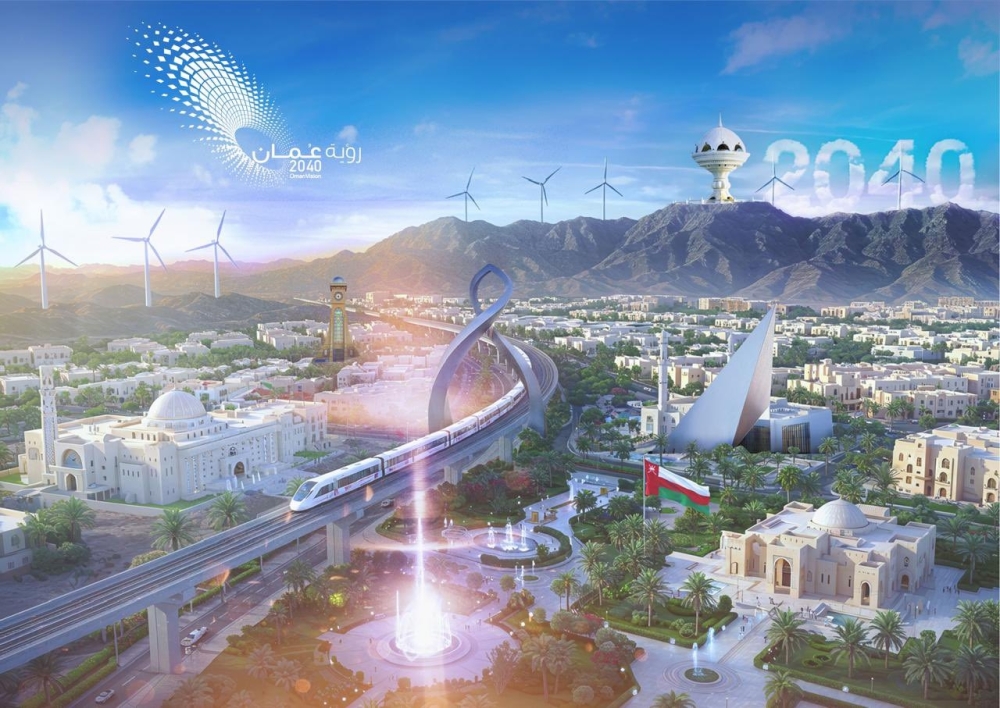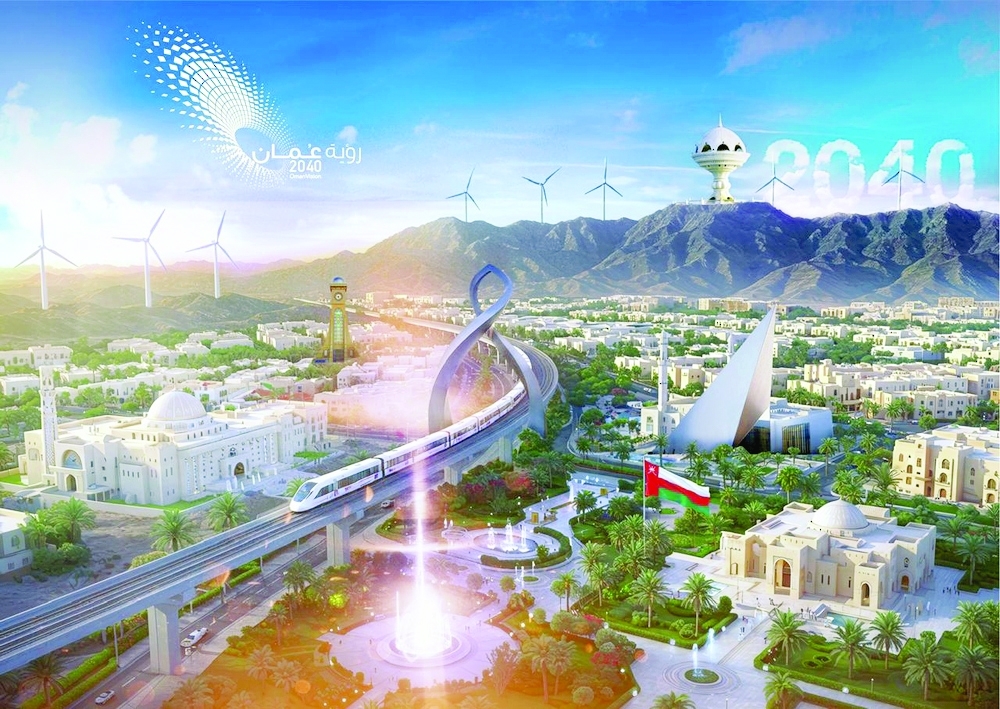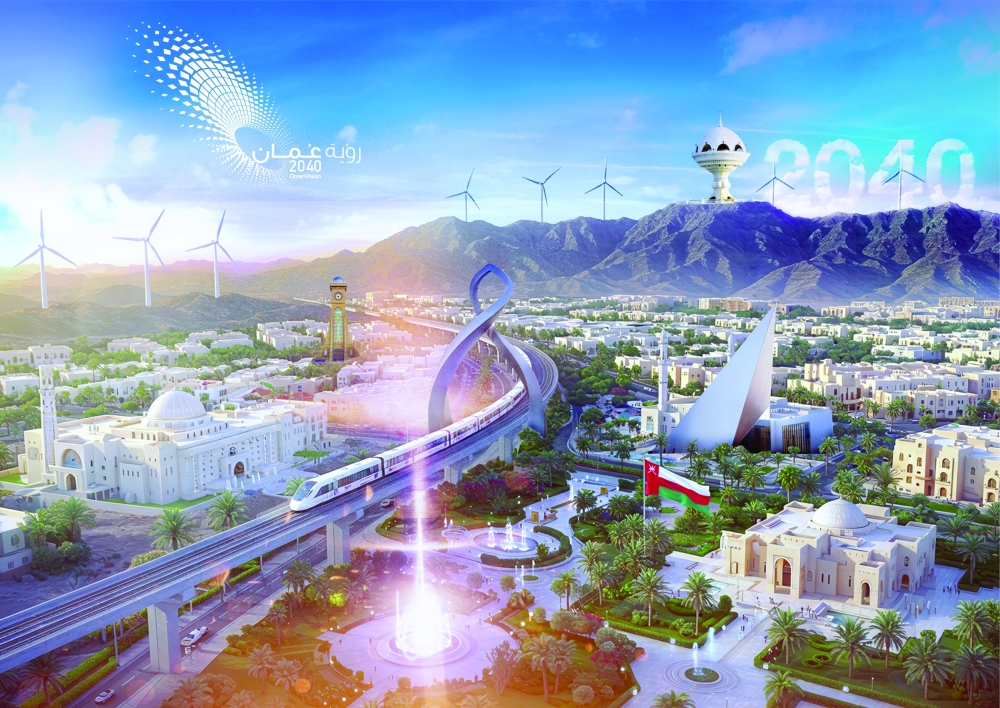


MUSCAT: The first-quarter report on Oman Vision 2040 reviewed the outcome of the first five years (2021-2025) of the Vision's implementation. It also reviewed the most prominent updates and efforts in 2026. The report examined the economic, legislative, and institutional transformations witnessed by the Sultanate of Oman. It further addressed the projects and programmes that have been realised and that have contributed to expanding productive and service capacities, enhancing development in the governorates, and improving services. In addition, the report monitored the results of the indicators and foresaw the opportunities and challenges that shape the features of the next phase.
On the economic side, the performance of real GDP shifted from a contraction of 3.4 per cent in 2020 to growth of 2.4 per cent in 2025, with an average annual growth of about 3.2 per cent from 2021 to 2025, indicating that economic activity has regained its growth path after the repercussions that accompanied the Covid-19 pandemic. At the level of the size of the economy, GDP at constant prices rose from RO 34.48 billion in 2021 to RO 39.29 billion in 2025, an increase of about 13.9 per cent.
During the early years of implementing Oman Vision 2040, a set of programmes and projects supporting growth and economic diversification were implemented, including investment, economic diversification, and financial sustainability programmes, in addition to the expansion of renewable energy projects, green hydrogen, manufacturing industries, logistics services, tourism, and other promising sectors. These efforts contributed to strengthening the productive base of the national economy and raising the contribution of non-oil activities to growth.
In the context of enhancing the role of the private sector in economic activity, the ratio of private investment to GDP rose from 15.7 per cent in 2020 to 16.8 per cent in 2025, with figures indicating the realisation of investments worth RO 7,073.4 billion in 2025.
The investment environment witnessed, during the early years of implementing Oman Vision 2040, a set of developments supporting the enhancement of the private sector's role, including the development of legislative frameworks regulating investment and public-private partnership, the launch of the "Invest Oman" platform, the activation of the investor residency system, the expansion of partnership projects in multiple sectors, and the establishment of the Future Fund Oman, which contributed to supporting investment in promising economic sectors.
The ratio of net foreign direct investment inflows to GDP rose from 2.9 per cent in 2020 to 4.5 per cent in 2025.
The Sultanate of Oman continued to attract investments from various countries of the world; the volume of foreign direct investment rose by 6.4 per cent by the end of the first quarter of 2026, compared with the same period in 2025, reaching RO 32.197 billion. The rise in the balance indicates the continued accumulation of existing foreign investments in the national economy.
On the path of financial sustainability, the ratio of public debt to GDP decreased from 67.9 per cent in 2020 to 34.6 per cent in 2025, an improvement of 33.3 percentage points, in parallel with the improvement of the Sultanate of Oman's credit rating with international rating agencies, such as Fitch, from BB- to BBB-, and its return to investment grade.
This decrease contributed to reducing the burden of public debt service and expanding the fiscal space available to finance economic, social, and developmental priorities. The improvement in financial indicators and the decline in debt levels were also reflected in the creditworthiness of the Sultanate of Oman, in parallel with the continuation of fiscal discipline and the development of government liability management.
A set of measures supported this path, most notably the implementation of the financial balance plan and the financial sustainability programme, the improvement of debt portfolio management, the use of financial surpluses to reduce liabilities, and the enhancement of spending efficiency and the development of public revenues. These measures contributed to consolidating financial sustainability and enhancing the ability of public finance to deal with economic variables.
On the path of environmental sustainability, the ratio of renewable energy consumption to total energy consumption rose from about zero in 2020 to 9 per cent in 2025. This progress coincided with a set of renewable energy projects entering the commercial operation phase, especially solar and wind energy projects, which contributed to increasing the share of energy produced from renewable sources.
In the field of innovation, the Sultanate of Oman advanced in the Global Innovation Index from 84th place in 2020 to 69th place globally in 2026.
The report reviewed what these projects contributed in terms of transformations through six transformations monitored by the report, and the productive capacities, public services, technologies, and economic opportunities they added, and the extent of their integration in supporting the transition from the Vision's targets to measurable results.
In the legislative transformation, texts were updated, markets and services were organised, roles were clarified, and a more coherent business environment was prepared for the implementation of policies and projects.
The transformation in national capacity development and quality of life monitors investment in people through the expansion of facilities and services, the development of educational content, the development of professional and research skills, and the strengthening of the link between knowledge and practice, as the number of completed school buildings during this period reached 49 buildings by the end of 2025.
In professional qualification, 11 units were licensed, and 822 professions were classified among the professions covered by professional accreditation requirements. In the area of healthcare, 68 health institutions were opened during the first five years of the Vision's implementation, distributed across the governorates to expand access to services, raise the level of specialisation, and enhance national readiness.
Pension and social protection systems were restructured starting in 2021, and their programmes and benefits included more than 3.3 million beneficiaries; this system includes benefits for children, the elderly, persons with disabilities, orphans, widows, and family income support.
In the transformation of the economic development model, the Sultanate of Oman achieved qualitative transformations in its economic model during the first quarter of implementing Oman Vision 2040, based on a solid developmental base and productive assets and infrastructure formed over five decades of the modern renaissance.
The report reviews investment and financing projects directed towards production, which are projects that prepare the investment environment, special and free economic zones, and develop lending and financing tools. The reorganisation of the Development Bank in 2023 strengthened its ability to perform its role as a catalyst for developmental financing, after its capital was raised from RO 100 million to RO 500 million, an increase of 400 per cent.
The financing ceiling for a single project rose from RO one million to RO 5 million, with the possibility of raising it to RO 7.5 million for qualitative projects, which expanded the scope of financing available to productive projects and raised their ability to implement larger and more impactful investments in economic activity.
Among the most prominent energy and petrochemical products projects is the construction of the "Ibri 2" solar power plant, which entered the operation phase in 2021 with a capacity of 500 megawatts, followed by the "Manah 1" and "Manah 2" solar plants in 2025 with a total capacity of 1,000 megawatts, in addition to industrial, manufacturing, and mining products projects; the Liwa Plastic Industries Complex enhanced local capacity to produce polyethylene and polypropylene, while the "Sanvira" carbon plant works to convert petroleum products into calcined petroleum coke.
The projects also included food production projects, such as the "Murooj" project, which links milk producers in the Dhofar Governorate with collection and manufacturing centres, and the Sohar silos, which added storage capacity that supports the regularity of grain supplies, in addition to pharmaceutical products and drug security projects, including the "Philex," "Menagen," and "Dhofar Pharma" pharmaceutical industries factories.
In the transformation towards the knowledge economy, the scope of technology projects expanded from the digitisation of procedures and the development of communications networks to building national assets and capabilities in space, computing, data hosting, artificial intelligence, the Internet of Things, digital payments, and the development of cybersecurity capabilities.
Among the most prominent projects that appeared in this transformation is the "Etlaq" spaceport in Duqm, which carried out the "Duqm 1" mission in 2024, then the "Duqm 2" mission in 2025, allowing the testing of launch, safety, and technical and logistical coordination procedures at an Omani site. The "Aman 1" and "OL-1" satellites were also launched, expanding private sector participation to owning and operating space assets and developing related services.
The number of companies operating in the space sector also rose from 11 companies in 2023 to 26 companies by the end of 2025. Private sector investments in the space sector grew by 270 per cent during the same period.
The Oman Genome Project, which began in 2024, aims to employ data in building a national reference for the genetic characteristics of the population, and its development includes specialised laboratories and a biobank for preserving samples, in addition to databases and analysis tools. These components combine genomics, computing, and statistics to produce local knowledge that helps understand genetic diseases and develop research and health services.
The report addressed the transformation in the role of government, the private sector, and civil society. With the launch of Oman Vision 2040, development entered a new phase focused on the sustainability of growth. This phase also focused on maximising the benefit from national assets, resources, and capabilities. It further focused on expanding the participation of the private sector and civil society in achieving national goals.
This relationship was embodied in the expansion of participation in corporate ownership and service delivery, and the expansion of the roles of professional and community institutions in qualification, professional licensing, and the provision of social support. Government empowerment supported these roles through regulatory frameworks, technical cooperation, support, and asset allocation, in parallel with the development of resource management and oversight. Thus, the expertise of the private sector and the knowledge of community institutions of the needs of practitioners and families became more present in the implementation of work and serving the economy and society.
Among the most prominent examples of this transformation is the divestment from government companies, which opened the way for the participation of individuals and private sector companies and stimulated local and foreign investment through public offerings and the sale of investment stakes.
The report reviewed the transformation towards decentralisation and balanced development of the governorates. In this context, the role of the governorates expanded in identifying priorities, preparing projects, and following up on their implementation. This expansion took place in coordination with government entities, the private sector, and the local community. It was based on an administrative and service base and infrastructure that developed through previous development stages. It was also based on local knowledge that helps direct resources according to needs.
This transformation gained a clearer framework with the issuance of the Governorates and Municipal Affairs System and the Municipal Councils Law in 2020, then the Governorates System in 2022, and the subsequent completion of the administrative structures of the governorates. This framework expanded the scope of local work in preparing plans and budgets, implementing development projects, following up on activities and services, and developing local resources.
The report devotes a chapter to development in the governorates, reviewing their economic components, projects, and the features of change in their activities and services during the period. This path highlights the expansion of the governorates' role in identifying development priorities and preparing projects, in parallel with the development of powers and the enhancement of financing tools allocated to local development.
This transformation was reflected in the growing role of the governorates in leading local development. It was also reflected in linking projects to the actual needs of communities and in developing services, infrastructure, and the urban environment. Development is no longer implemented according to a uniform model in all governorates. Instead, it is based on the comparative advantages of each governorate. Coastal governorates enhanced their investments in ports, fisheries, and marine tourism. Governorates with agricultural wealth focused on production and food manufacturing. Governorates rich in mineral resources expanded in mining and related industries. Other governorates turned to renewable energy, logistics services, and tourism, according to the components they possess.
The results of the indicators of Oman Vision 2040 show tangible progress towards achieving the national targets and confirm the impact of the efforts, reforms, programmes, and initiatives implemented during the Tenth Five-Year Plan (2021-2025), which represented the first executive plan of the Vision, especially in the areas of financial sustainability, the investment environment, human capital development, governance, and digital transformation. The indicators recorded improvement in multiple economic, social, institutional, and environmental areas, which enhances the Sultanate of Oman's readiness to move to the next phase of implementing the Vision.
The results showed varying levels of achievement in the Vision's indicators; 10 indicators achieved their 2030 targets, namely: the Index of Economic Freedom in the World, the indicator of healthy life expectancy at birth, the indicator of public spending to GDP, the Youth Development Index, the indicator of the ratio of budget deficit or surplus to GDP, the indicator of the ratio of current account deficit or surplus to GDP, the indicator of the ratio of total public debt to GDP, the indicator of the availability of effective economic leadership by 2021, the indicator of established decentralisation by 2022, in addition to the indicator of the implementation of the hierarchical system of population clusters by 2022.
At the same time, other indicators came close to achieving their 2030 targets, including the average ranking of Omani universities among the top 500 universities in the QS ranking, the labour productivity growth rate, and the Environmental Performance Index.
A number of indicators continued to improve towards the targets in a wide range of areas, most notably innovation, talent competitiveness, human and social development, governance, digital transformation, investment, economic diversification, and renewable energy. On the other hand, a number of indicators maintained stable levels, while other indicators showed the need to strengthen efforts and accelerate the pace of improvement.
These achievements constitute an important base for the Eleventh Five-Year Plan (2026-2030), which focuses on building on the gains achieved, maintaining positive performance levels, and accelerating the pace of achievement in the indicators that have not achieved their targets or that require further improvement, in a way that supports the sustainability of progress and increases the opportunities for achieving the national targets of Oman Vision 2040.
Oman Observer is now on the WhatsApp channel. Click here